Smart Home Energy Management System: Solar Energy Integration, Automation and Smart Energy Management
With rising energy prices, homeowners are seeking more intelligent ways to save money, and a smart home energy management system is becoming a must-have part of modern living. Bringing together solar, advanced energy management and intelligent automation allows homeowners to take control of their energy use and enhance comfort and sustainability.
In this guide we will see how a home energy management system works, how it integrates with solar energy, battery technology and smart devices and why it is becoming one of the most effective ways to create an efficient and future-ready home. If you are considering a new solar installation, or want to optimise an existing setup, this article will help you understand the benefits of smart energy solutions.
1. What Is a Smart Home Energy Management System?
Smart home is not just controlling lights via a mobile app anymore. Today it’s about creating an interconnected ecosystem that provides more convenience, comfort and efficiency. Central to this ecosystem is an energy management system, which enables homeowners to understand and optimise how electricity is generated, stored and consumed around the property.
An energy management system collects data from various sources such as solar equipment, smart appliances, battery units and utility connections. It analyses this information and assists homeowners in making informed decisions about their everyday energy habits.
A modern home energy management system can manage energy flows automatically according to demand, weather conditions and occupancy patterns. This results in a more efficient home, less waste, and better performance overall.
2. What Is The Role Of Solar Power In A Smart Home?
The rise of solar technology has transformed the way households generate electricity. Homeowners are no longer dependent on utility providers to create power, but can now harness solar energy to power everyday appliances and devices.
If designed correctly, the solar panel installation will absorb the sunlight and convert it into electricity to be used in the household . This energy can be incorporated into a smart home and distributed in a smart manner to different parts of the property based on real-time demand.
Homeowners who combine a solar energy system with smart technology can track solar production, schedule appliances for optimal times and maximise the use of renewable electricity. This reduces the dependence on the grid and also helps in creating a cleaner environment with more use of renewable energy.
3. Why Energy Management Is Important for Modern Homes?
Many homeowners are not aware of the amount of electricity wasted on a daily basis. If no one is monitoring, then appliances that do not need to be on may still be on – thus increasing energy usage and utility bills.
Good energy management can help homeowners learn about their household habits and ways to reduce waste. By understanding energy use patterns, users can make smarter decisions about heating, cooling, lighting, and how they operate their appliances.
Energy demand is rising and modern households need smarter solutions. An intelligent energy system balances usage, while ensuring energy is available when it is needed most. This method is in line with sustainability goals and financial saving in the long run.
4. How Solar and Automation Work Together in a Home Energy Management System
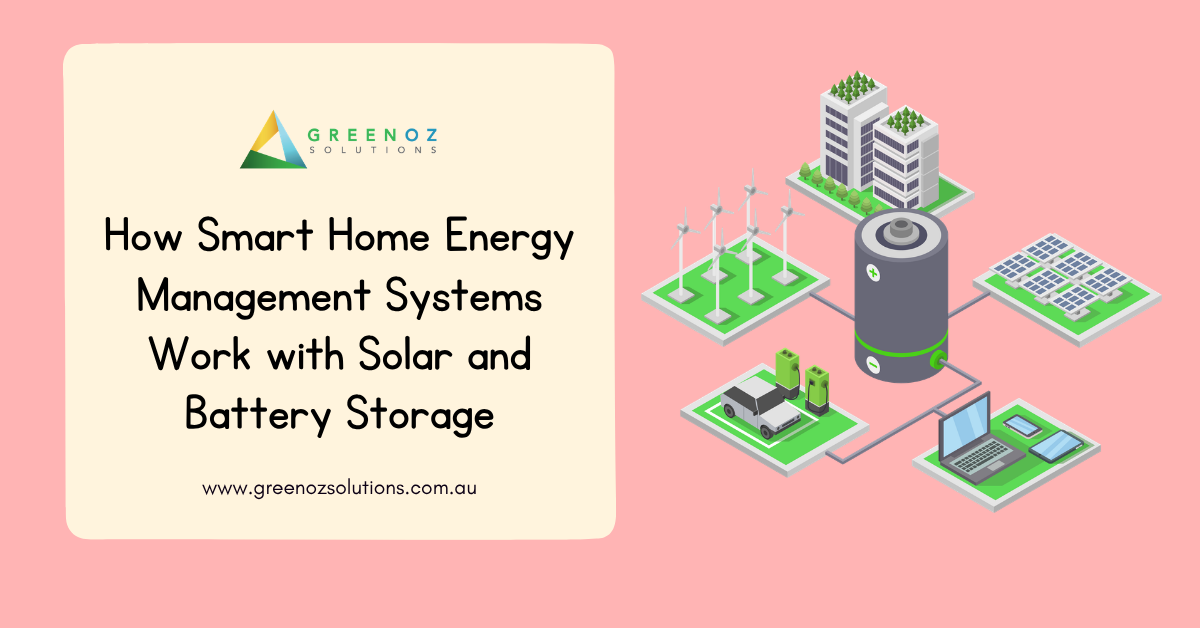
One of the main advantages of a modern system is the ability to integrate multiple technologies together on a single platform. A complete energy management system can bring together solar generation, battery technologies, smart appliances and home controls into one central interface.
Additionally, intelligent automation can schedule energy-intensive devices to run during the peak of solar production. This reduces dependency on expensive grid electricity and improves the overall efficiency of the household.
Many homeowners decide to bundle lighting, air conditioning, water heating and electric vehicle charging into one platform. It gives a seamless smart home experience and makes the best use of available energy resources.
5. What is Battery Storage in Smart Energy Management?
But generating electricity during the day is only part of the equation. Many households invest in battery storage solutions that store excess electricity for later use to get the most out of solar generation.
A modern battery system enables homeowners to store excess energy generated during the day and draw on it in the evening when solar output is reduced. This cuts back on dependence on utility providers and enhances energy resilience.
With an advanced energy storage system, stored electricity can be automatically deployed according to usage patterns and pricing schedules. Some systems even prioritise critical household loads during outages, providing uninterrupted power when needed.
By adding solar battery storage you can make a huge difference to the performance of your smart energy set up and help you create a more self sufficient home.
6. How Smart Devices and Smart Appliances Help Reduce Energy Consumption?
Connected technology is a significant factor in efficiency gains. Today’s smart devices deliver real-time information and automated control that help homeowners save on unnecessary power usage.
For instance, smart appliances can be run at times of high solar generation rather than consuming expensive grid power during peak hours. This will help to lower overall energy consumption and improve the return on a solar investment.
For example, a smart thermostat can automatically adjust the indoor temperature based on whether people are in the house and the weather forecast. These technologies, along with other smart home devices, offer opportunities to increase comfort and reduce operating costs.
The result is a more responsive, efficient home that can adapt to changing conditions throughout the day.
7. Can Smart Home Automation Help to Manage Energy More Efficiently?
One of the main reasons why homeowners opt for smart technologies is the ability to automate mundane processes. Modern home automation platforms do away with the need for constant manual adjustments, and improve overall efficiency.
Automation can program energy management devices to respond automatically to changing conditions. Air conditioning equipment might reduce operation during peak pricing periods as battery reserves support household loads.
Advanced systems use monitoring and control features to coordinate energy flow between multiple devices. This lets homeowners manage energy more effectively without needing to constantly monitor their systems.
With technology advancing, intelligent automation for energy consumption management is becoming more accessible and easier than ever before.
8. How Do Solar Panels and Smart Inverters Work Together?
All solar systems are equipped with equipment to convert the solar generated electricity to usable power. That’s where the smart inverters come in.
Smart inverters, unlike traditional inverters, provide detailed performance information and allow for a better interaction between the solar installation and the wider household network. They can modulate output, support grid stability and improve system efficiency.
These technologies, combined with a modern storage system, allow for the optimisation of energy production and consumption throughout the day. Homeowners have greater visibility into both energy production and usage allowing them to make smarter decisions about electricity consumption.
Such a level of integration is essential for realising the full benefits of solar technology and creating a very agile energy ecosystem.
9. What are the Advantages of Smart Energy Monitoring and Control?
One of the most useful features of a modern smart solution is energy monitoring. Real-time insights give homeowners a clear picture of how their property consumes electricity.
Smart meters and connected platforms allow users to see their energy consumption and generation on one dashboard. This knowledge can help identify inefficiencies and opportunities to improve operations.
Access to detailed energy data enables households to reduce energy waste, lower their electricity bill and increase overall energy efficiency. It also offers more transparency into how energy resources within the home are being utilised.
More and more homeowners will become active energy consumers and data-driven decision making will play an increasingly important role in sustainable living.
10. Should You Buy a Home with Smart Features and Solar?
The answer for many homeowners is yes. A smart home that runs on solar power will save you money in the long run, make you more independent, and give you more control over what goes on in your home.
Combined with a renewable generation source and battery technology with intelligent controls, this can enable homeowners to significantly reduce the energy purchased from the utility grid. This can result in lower energy bills and better financial returns over time.
These systems are particularly attractive because they can optimise the home’s energy resources and increase comfort. A good design can result in more energy efficiency and savings, can allow for future upgrades in terms of technology and can help you to live a more sustainable lifestyle.
In evaluating a solar investment, it is important to look beyond immediate savings and to consider long term benefits such as reliability, resilience and impact on the environment. For many households, the future of residential energy will involve smart home technology with a solar solution.